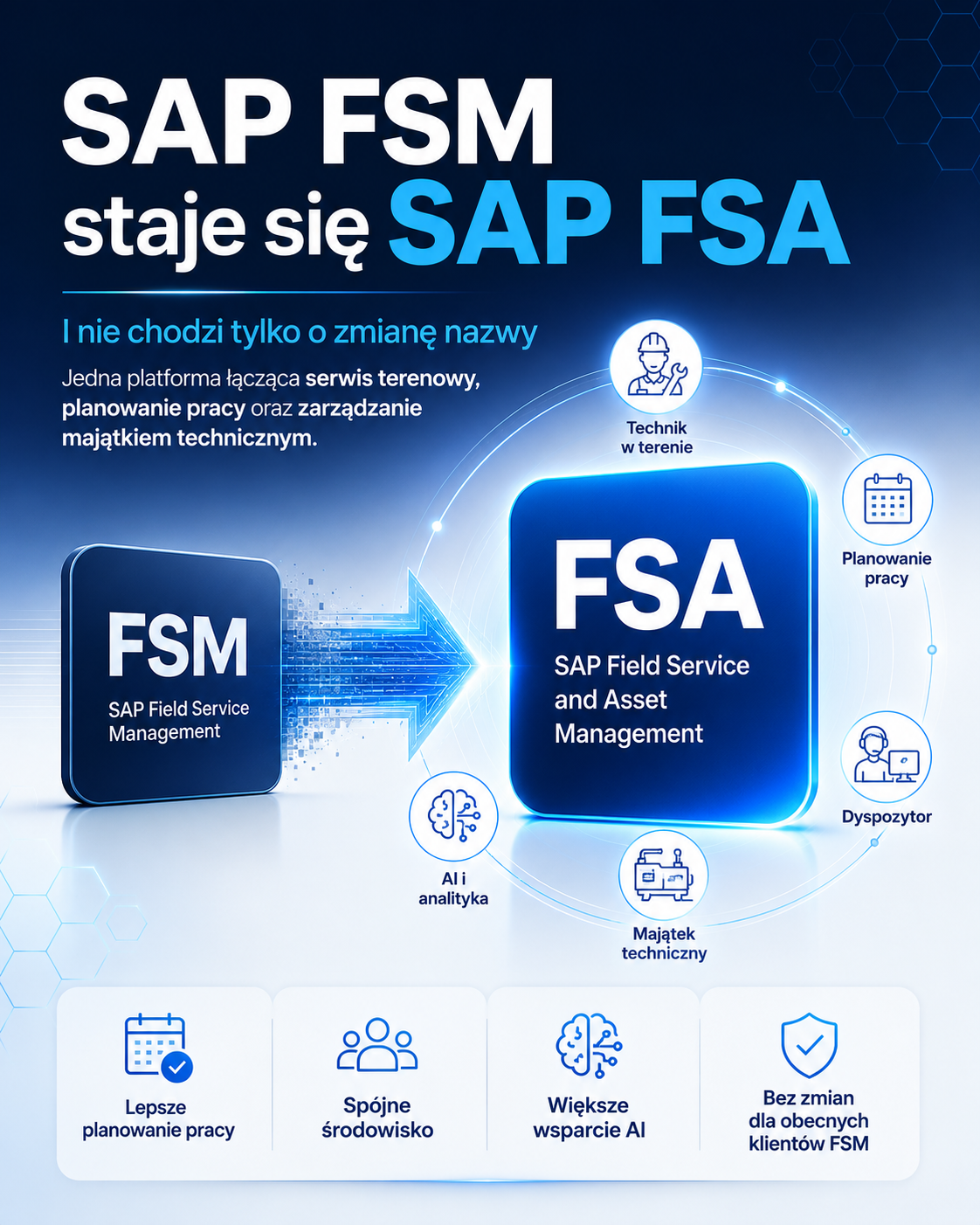
SAP Field Service Management (FSM) is evolving into SAP Field Service and Asset Management (FSA). At first glance, this may seem like a simple rebranding. In practice, SAP is expanding the solution into a single platform that integrates field service, resource planning, and technical asset management.
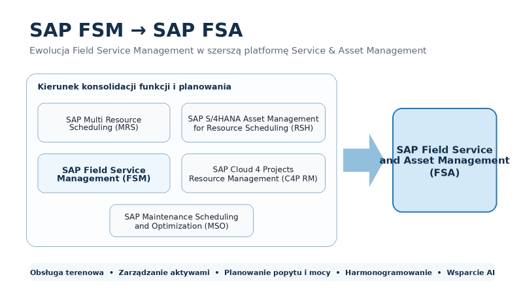
Important information for current FSM customers:
Existing features, processes, and integrations remain unchanged. Migration to a completely new system is not required, and new capabilities will be rolled out gradually in existing environments. The rebranding and development of FSA began gradually in June 2026.
What can we expect from the FSA?
• better planning of team workloads and employee availability,
• more advanced planning and optimization of technicians’ work,
• a stronger integration of field service with equipment and asset maintenance,
• greater use of AI in planning and decision-making,
• a more consistent environment for planners, dispatchers, and field technicians.
In practice, this means shifting from the question, “Which technician should be assigned this ticket?” to a broader perspective: “Do we have sufficient resources to complete the planned work, where will bottlenecks occur, and how can we best distribute the work among teams?”
This is where FSA begins to go beyond traditional Field Service Management and increasingly integrates the worlds of SAP Service, Asset Management, and resource planning. The direction is clear: fewer disparate tools, more collaborative planning, and a single, more cohesive process from the initial work request all the way through to its completion by a technician in the field.
This is one of the most interesting changes in the SAP Service ecosystem in recent years—and definitely more than just a new logo and product name.


